Guide 03 / Balance
Balance is a conversation with the ground.
Balance combines vision, inner-ear signals, joint information, muscle control and attention. It is a skill, not a fixed personality trait. It can be challenged gently and supported by the spaces around you.
Why does balance deserve attention?
Standing, turning, stepping over a threshold and walking on an uneven surface all ask the body to manage changes. Confidence may reduce when balance feels uncertain, which can lead to less movement and less opportunity to practise.
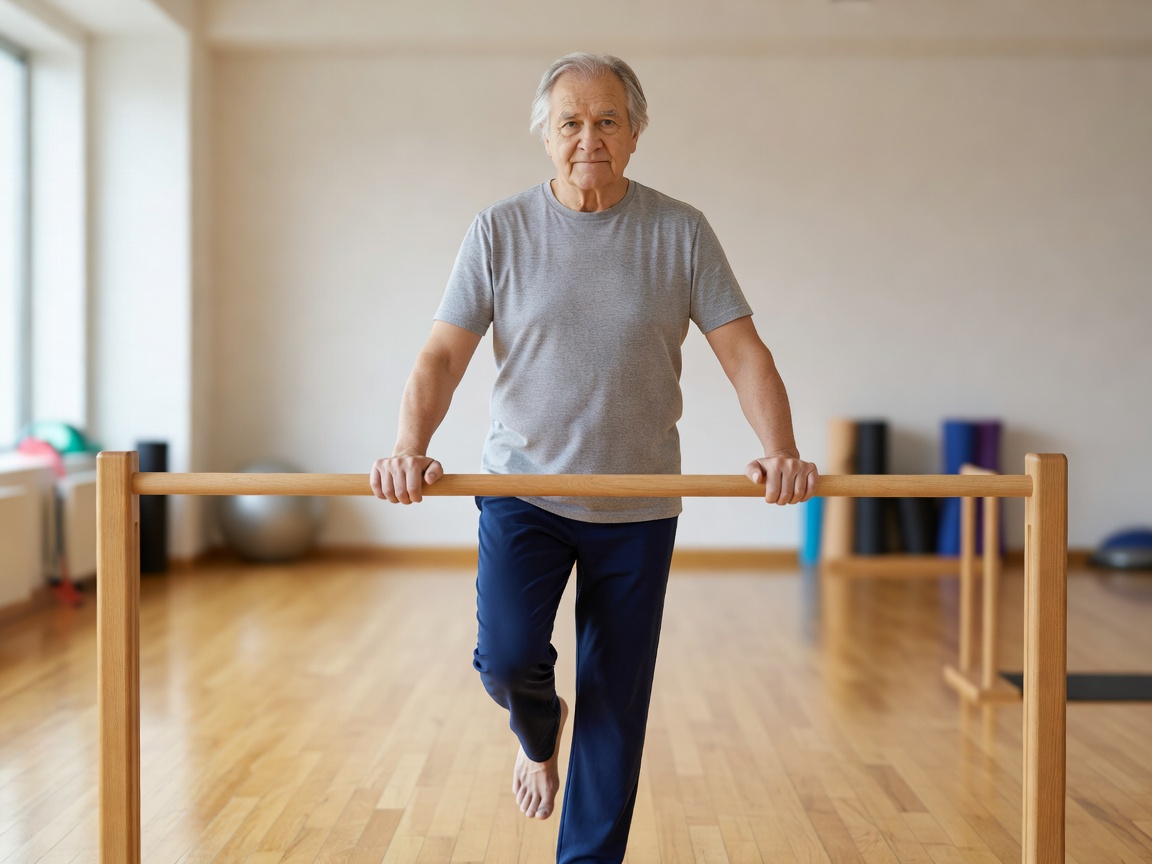
Balance activity is useful because it asks for control rather than simply speed or strength. It can include weight shifts, stepping patterns, turning and standing in different positions, provided the setting is appropriate.
What makes practice safer?
Use a clear area and a support that will not slide if you need to steady yourself. Keep attention on the task. A qualified instructor or health professional can help adapt movements when a condition, medication or previous fall affects confidence.
Do not practise a difficult balance task near stairs, hard edges or clutter. The challenge should be adjustable. If it feels uncontrolled, return to an easier version instead of treating instability as proof that more effort is required.
Does strength help balance?
Strength and balance overlap. Stronger legs can help with stepping and recovering position, while mobility can make turning and reaching easier. Walking supports movement confidence, but walking alone does not cover every balance demand.
A rounded approach therefore combines ordinary walking with deliberate changes of direction, supported standing and strength movements. The best mix depends on the person and the context.
What about fear?
Fear can be informative without being a verdict. Notice which task creates uncertainty: a dark hallway, a crowded pavement, a wet surface or standing from a low seat. Address the task and the environment separately.
Professional advice is important after a fall, when dizziness is present or when balance changes suddenly. General exercise information cannot identify the reason for a change.